Why optimized parameters fail out of sample
4 min read
Optimized parameters fail out of sample because the selection process can capture random noise along with real signal. That makes the chosen backtest result upward biased relative to what fresh data can deliver. Sonar’s strategy validation framework, Backtest Overfitting Audit, and Deflated Sharpe Ratio all address this problem by treating tuned backtests as selected estimates that must be adjusted for multiple testing and overfitting.
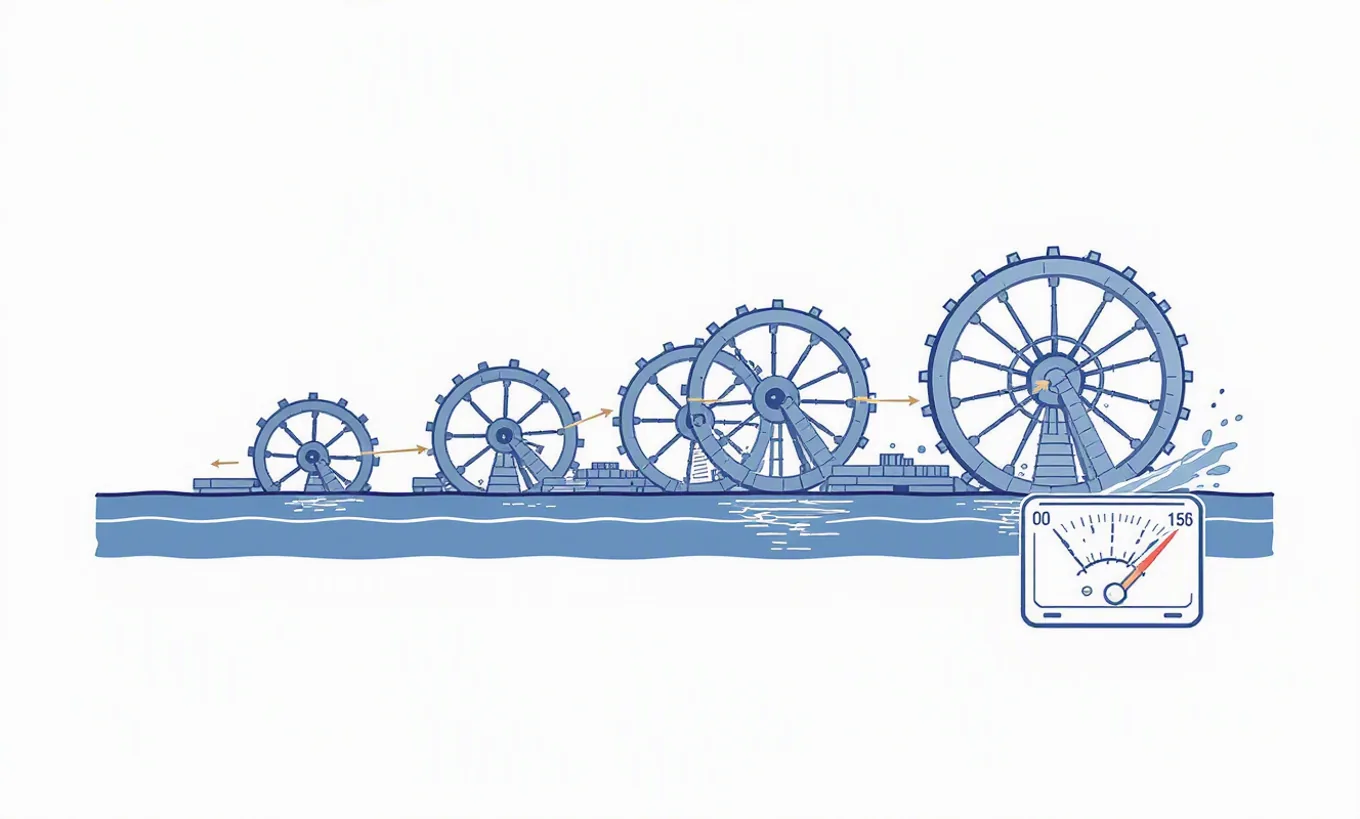
Parameter optimization improves a strategy’s in sample fit by selecting the setting that looks best on historical data. If some of that apparent fit comes from random variation rather than a persistent effect, the selected parameter is partly fitted to noise. In that case, the backtest embeds both signal and noise, but future data will only reward the signal component. The result is a lower expected out of sample performance than the backtest suggests by construction.
Sonar’s strategy validation research frames this as a core overfitting problem in systematic trading. A backtest can look strong because the research process searched across many variants and kept the one with the best historical result. That selection step raises the reported in sample metric even when the underlying edge is unchanged, because extreme outcomes are more likely to be chosen from a larger search. When the chosen specification is deployed on new data, the noise component that helped it win the in sample competition does not reliably repeat, so performance tends to decay out of sample. This is the mechanism by which optimized parameters fail.
The Backtest Overfitting Audit tool is designed to measure that selection effect. It evaluates how much of a strategy’s reported backtest quality is likely to reflect genuine skill versus optimization luck from trying multiple variants. In plain terms, the more aggressively parameters are tuned, the more opportunities the process has to capture noise. As the degree of parameter optimization rises, the expected gap between the selected backtest result and future realized performance widens. This is the practical meaning of performance decay from overfitting in Sonar’s framework.
The Deflated Sharpe Ratio provides the statistical lens for this adjustment. Sonar’s glossary defines it as a Sharpe ratio significance measure that accounts for non normal returns, finite sample length, and multiple testing. That last term matters here. If a researcher tests many parameter combinations, the best observed Sharpe ratio is not directly comparable to a single unsearched Sharpe ratio, because part of its value can arise from selection across many trials. Deflating the Sharpe ratio corrects for that inflation. The larger the search over parameters, the stronger the required adjustment, and the less of the backtest Sharpe can be treated as evidence of a durable edge.
This connects directly to noise fitted parameters. A parameter that is mostly anchored to stable structure should retain more of its backtest behavior out of sample. A parameter that is partly chosen for accidental historical alignment should lose that accidental contribution when evaluated on fresh data. The backtest does not separate those two pieces on its own. It reports the combined result. Deflation and overfitting audits are meant to estimate how much of that combined result is likely to disappear after the strategy leaves the sample that was used to tune it.
Sonar’s validation material also emphasizes that overfitting is a continuum rather than a binary label. Minimal tuning leaves less room for accidental alignment with noise. Extensive tuning creates more degrees of freedom and therefore more ways to discover historically flattering settings that do not generalize. That is why heavily optimized strategies tend to show a larger divergence between in sample and out of sample Sharpe ratios than simpler specifications. The mechanism is not mysterious. The optimization process selects the maximum of many noisy estimates, and maxima of noisy estimates are biased upward relative to what can be expected later.
The same logic explains why out of sample underperformance is systematic rather than incidental in overfit models. If the chosen setting owes part of its superiority to noise, then some amount of disappointment on new data is already baked in. Future performance does not need to be poor in absolute terms for this statement to hold. It only needs to fall short of the backtest by the amount previously contributed by noise fitting. In this sense, parameter optimization can create a structural optimism bias in backtests.
Sonar’s materials support the validation response to this problem. Researchers should treat a backtest as a selected estimate, not as an unbiased forecast, when parameters were tuned across alternatives. The relevant question is not only whether the backtest looks good, but how much selection pressure was applied to obtain it and how much of the reported Sharpe remains after adjustment for multiple testing. That is the purpose of the Backtest Overfitting Audit and the Deflated Sharpe Ratio in Sonar’s research stack.
Drafted with AI assistance from cited sources. Reviewed and approved by Sonar Sciences Quant & Research Team.