Why drawdown statistics need long samples
3 min read
Short backtests tend to understate risk because they include fewer opportunities for rare adverse events and regime changes, leading to overly benign worst-case loss estimates.
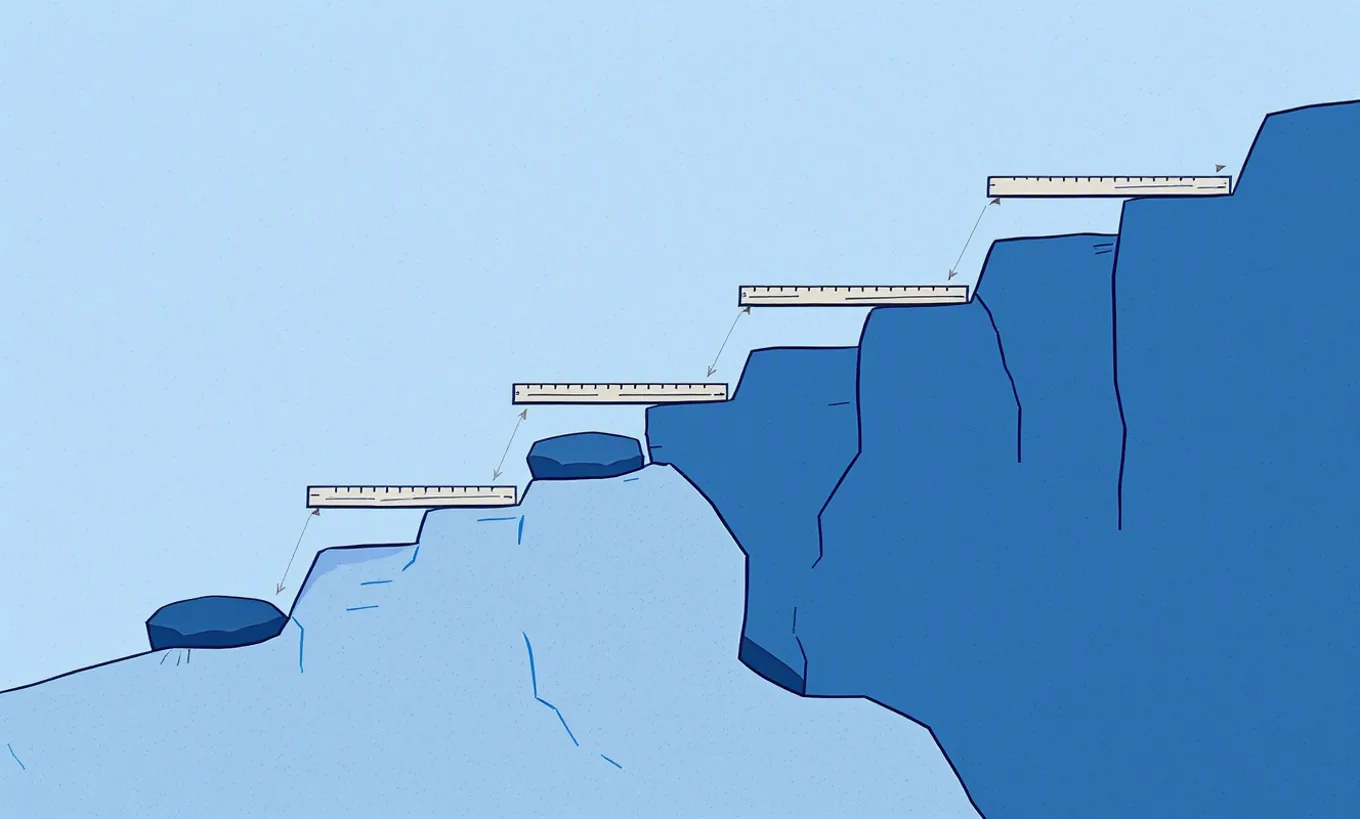
Maximum drawdown is a path-dependent risk statistic: it measures the largest peak-to-trough decline observed over a specific sample. That last clause matters. Because maximum drawdown is defined as the worst loss seen within the observation window, extending the window gives the process more opportunities to set a new low relative to a prior peak. In practical terms, a short backtest will often report a smaller maximum drawdown simply because it has observed fewer adverse paths, not because the strategy is inherently safer.
The Sonar Sciences strategy-validation material emphasizes that short samples are structurally dangerous for inference because they contain too few independent opportunities to reveal adverse behavior. The article argues that limited histories can make strategies appear more stable than they are, since rare but consequential events may not have occurred inside the tested interval. This directly applies to drawdown statistics: if the sample is short, the estimated worst peak-to-trough loss is conditioned on a narrow slice of history and is therefore biased toward understatement of the true worst case that might emerge over longer observation periods. [1]
This issue is closely related to multiple-testing and backtest fragility. Sonar’s backtest-overfitting audit tool is built around the idea that apparent quality in a backtest can be an artifact of the sample rather than a durable property of the strategy. A drawdown estimate taken from a short window is vulnerable to the same problem. If the interval happens not to include a regime shift, volatility expansion, or long adverse sequence, the realized maximum drawdown will look benign. Extend the same test across more history, and the worst observed loss can increase materially because the strategy has encountered more market states and more chances to experience an extreme excursion. [2]
Sonar’s glossary entry on the Deflated Sharpe Ratio reinforces the broader statistical point: observed performance statistics must be interpreted in light of sample length and selection effects. While that page focuses on Sharpe-ratio inflation under multiple trials, the underlying lesson generalizes to drawdowns. Short samples produce noisier, less reliable estimates of tail-sensitive quantities. Maximum drawdown is especially sensitive because it is an extreme-value summary of a single realized path, not an average over many independent outcomes. [3]
- maximum drawdown depends on the observation window;
- short backtests omit many potential stress episodes;
- therefore drawdown estimates from short samples should be treated as incomplete and likely optimistic measures of worst-case loss. [1][2][3]
For quantitative traders and strategy developers, the practical implication is methodological: drawdown should be evaluated over the longest defensible history and across multiple regimes, not read as a fixed property inferred from a brief backtest.
Drafted with AI assistance from cited sources. Reviewed and approved by Sonar Sciences Quant & Research Team.