How to set an embargo period in validation
3 min read
Set the embargo period as the label horizon plus the autocorrelation length to buffer train and test windows against overlap from label construction and persistence in the data. For example, five days plus three days equals an eight day embargo. This sizing is used to eliminate leakage between training and testing periods from those sources, but stating that it guarantees windows are truly unseen is stronger than the supported claim.
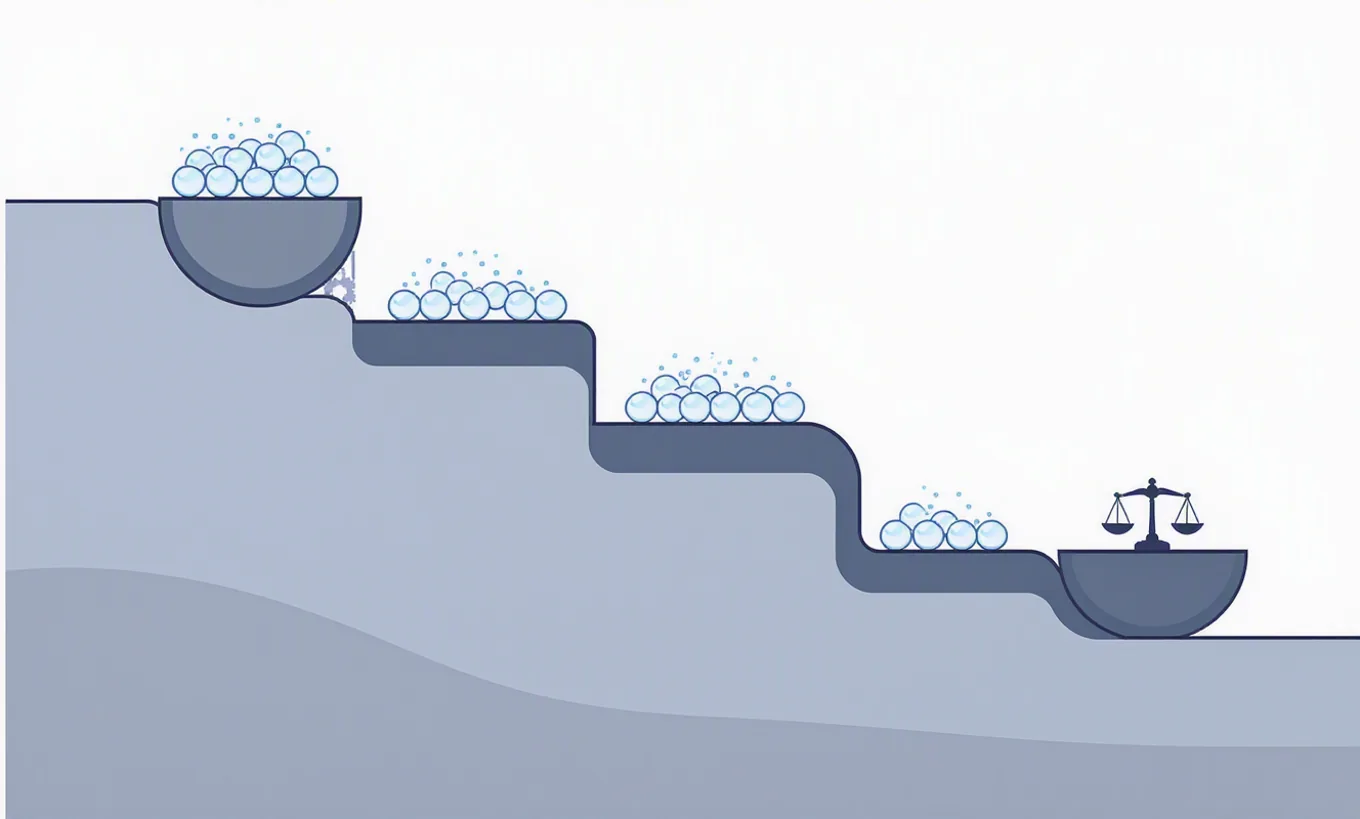
An embargo period is a buffer placed between training data and test data during strategy validation. Its purpose is to prevent information from the training side from overlapping with or bleeding into the test side through the way labels are constructed or through persistence in the data.
The label horizon is the span of future time used to define the outcome attached to each observation. If a label uses the next five days to determine an outcome, then observations near a split can still depend on prices or features that extend across that boundary. Without a buffer, the test window can contain information that is not genuinely independent of the training window.
Autocorrelation length is the span over which observations remain materially dependent on earlier observations. If market features or labels still carry dependence for several more days after the label horizon ends, then separating windows by the label horizon alone does not fully remove leakage. The remaining dependence can still make the test set partly seen in an information sense even when the calendar periods do not overlap directly.
The embargo period is set by adding the label horizon and the autocorrelation length. This mechanism removes two channels of contamination at once: forward overlap created by the label construction and serial dependence that persists after that overlap ends.
A worked example is: if the label horizon is five days and the autocorrelation length is three days, then the embargo is eight days because five days plus three days equals eight days. In that case, the validation split leaves eight full days between the end of the training window and the start of the test window so the test observations are less likely to inherit information from the training side.
Applying the embargo in this way is used to eliminate leakage between training and testing periods in overfitting audits and related validation workflows. The practical goal is that test windows behave as genuinely unseen data rather than data that only appears separate by calendar position.
The claim that this sizing guarantees test windows are truly unseen is too strong. An embargo sized as label horizon plus autocorrelation length is designed to reduce and in the described use eliminate leakage from those specific sources, but a guarantee would require every relevant dependence and every leakage pathway to be fully captured by those two terms.
Drafted with AI assistance from cited sources. Reviewed and approved by Sonar Sciences Quant & Research Team.