How to detect look-ahead bias in a backtest
3 min read
Strategy validation and overfitting audits help ensure backtest robustness, emphasizing caution against look‑ahead bias and careful interpretation of performance metrics.
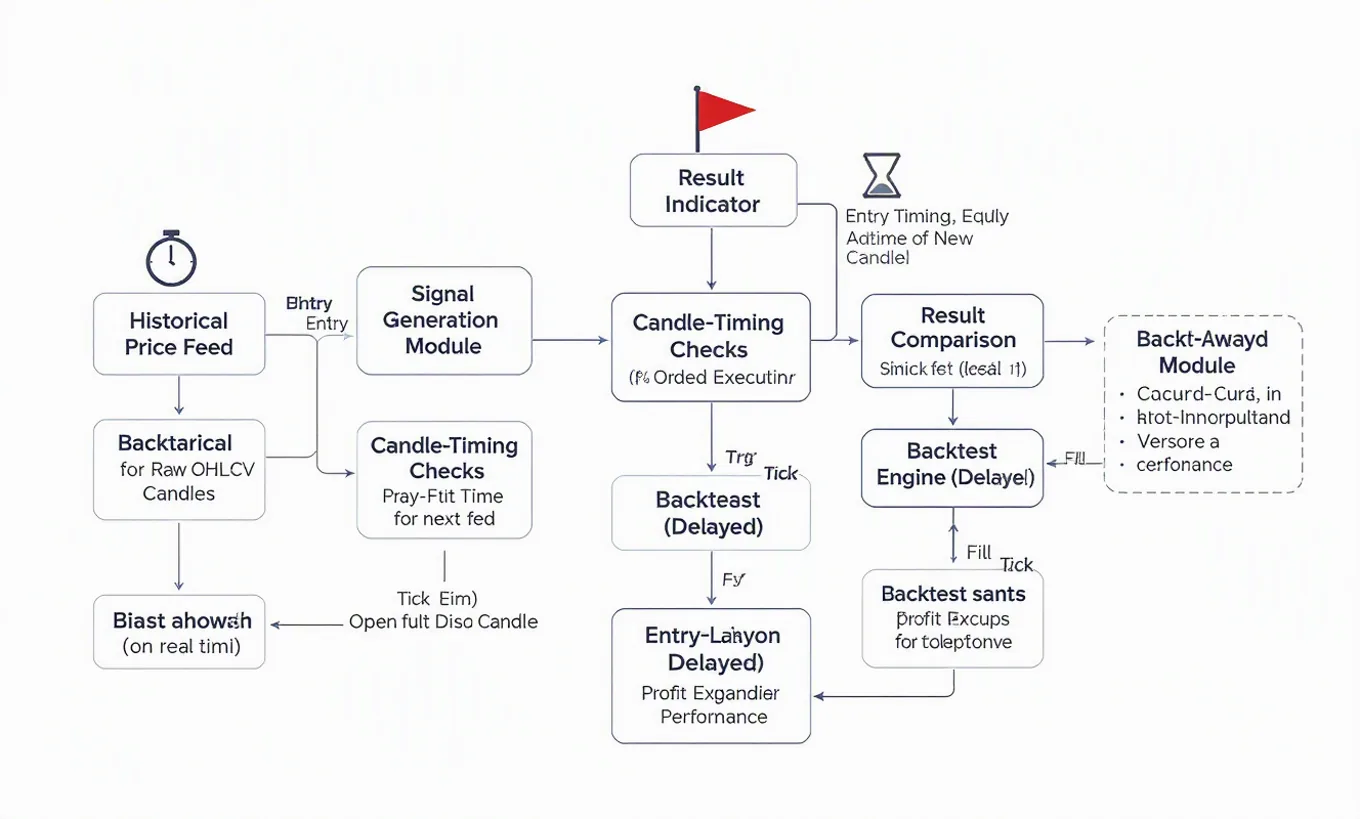
Strategy validation exists to test whether a backtest result is likely to survive contact with live trading conditions rather than reflecting artifacts of the research process. In that context, any use of information that would not have been available at the decision time is a model validation failure, because it makes simulated results unrepresentable of implementable trading. The Sonar material on strategy validation frames validation as a process of challenging a strategy’s assumptions and testing whether reported results are robust or instead driven by flaws in construction, testing, or interpretation. The backtest overfitting audit tool similarly focuses on identifying whether a reported edge may be explained by research process issues rather than durable signal content. The glossary entry on Deflated Sharpe Ratio adds a related caution: even apparently strong summary statistics can be misleading when the testing process involves multiple trials or model selection pressure, so a metric alone cannot certify validity.
Validation should distinguish genuine signal from artifacts introduced during research and backtesting. Audit‑style checks are part of a disciplined research workflow. Performance statistics should be interpreted cautiously, especially when model selection or repeated testing is involved.
Look‑ahead bias should be treated as a serious validation risk within a broader strategy‑audit framework, and backtest results should not be accepted on headline statistics alone.
Drafted with AI assistance from cited sources. Reviewed and approved by Sonar Sciences Quant & Research Team.