Why every public claim needs a source
4 min read
Sonar’s publishing materials require public claims to be tied to sources so conclusions remain traceable to evidence. Without a documented source, a public claim cannot be reliably checked later and cannot be systematically retired when underlying evidence changes. A claim register solves this by recording each claim together with its supporting source, making both verification and maintenance mechanical.
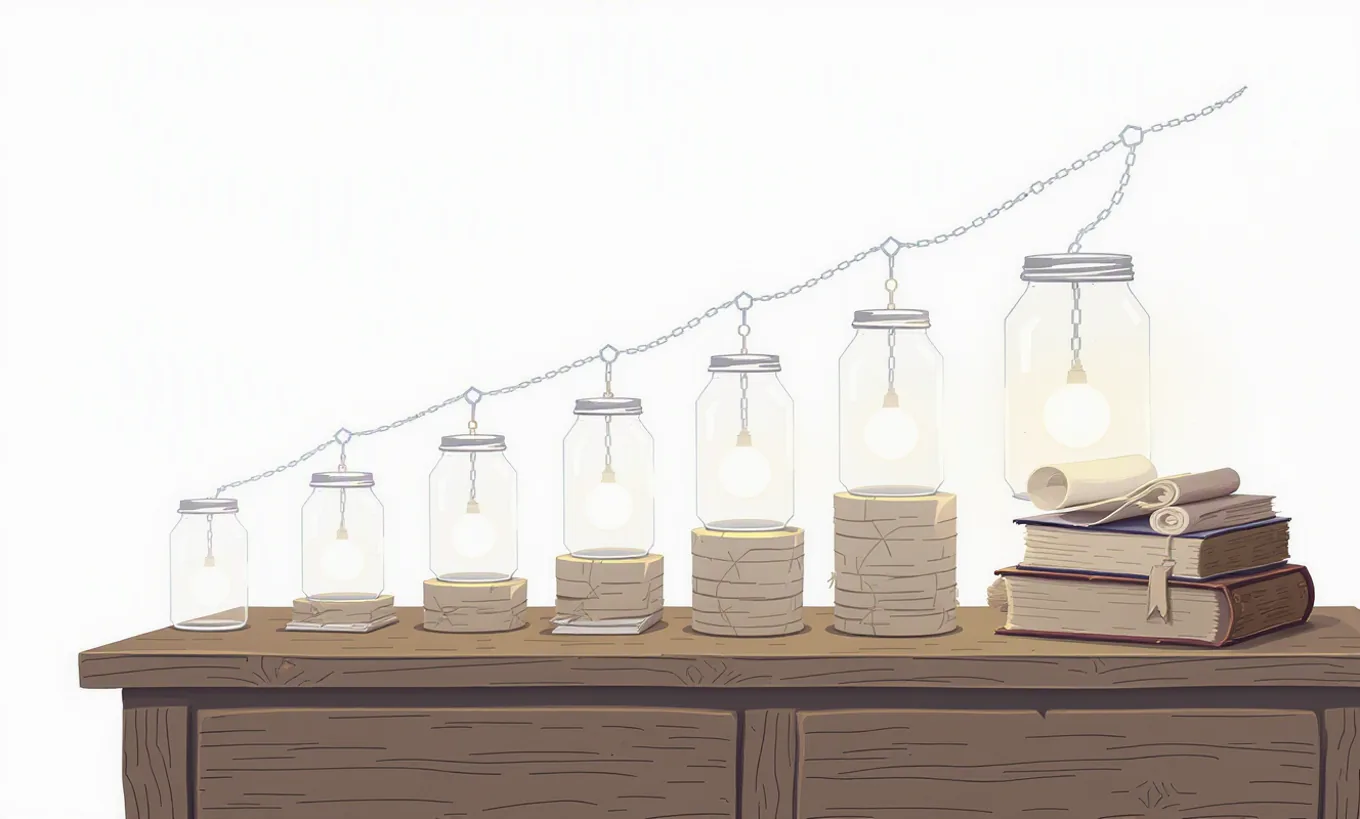
A public claim needs a documented source because publication is not the end of the research process. Once a claim is visible to others, it must remain checkable over time. If the claim has no recorded source, there is no reliable way to verify where it came from, what evidence supported it, or whether the evidence is still current. That makes review ad hoc and retirement uncertain. A claim register changes that by attaching each public statement to its evidence so verification and maintenance become routine steps rather than memory work.
Sonar’s research-to-publishing documentation makes source citation a publishing requirement. The process says public-facing research should preserve traceability from conclusions back to evidence, and that published claims should be supported by cited material rather than undocumented assertions. In practice, this means a claim is expected to carry a receipt. The receipt is the source record that lets another researcher inspect the basis for the statement and decide whether it still stands.
The mechanism matters because verification is a concrete task. To verify a public claim, a reviewer needs to know what source was used, where in that source the support appears, and whether the source is still valid for the statement being made. Without that information, the reviewer is forced to reconstruct the research trail from scratch. Reconstruction is slow, error-prone, and often impossible when the original context has been lost. An unsourced statement may sound precise, but it cannot be systematically checked because the necessary audit path is missing.
The same problem appears when a claim needs to be retired or updated. Claims expire for ordinary reasons. Definitions change. methods are revised. documents are replaced. thresholds are updated. If a statement has no source attached, there is no mechanical way to determine which claims depend on an outdated document or concept. Someone must instead rely on memory or broad manual search. That is not a maintenance system.
A claim register provides the missing structure. Sonar describes the claim register as a record of claims and their supporting evidence, including source information for each claim. This turns each public statement into an auditable object. Instead of asking who remembers why a sentence was published, a reviewer can inspect the register entry, follow the linked source, and compare the language of the claim with the evidence. The work becomes mechanical because the lookup path is defined in advance.
The value of this structure is visible in Sonar’s publishing workflow and audit-oriented tools. Sonar’s materials on research publication and audit practice emphasize preserving evidence chains so that methods and conclusions can be reviewed after publication. The backtest overfitting audit page is an example of this general audit logic. It frames research outputs as things that should be reviewable against explicit inputs and checks, not accepted as unsupported conclusions. A claim register applies that same audit principle at the sentence level. It tells a reviewer what evidence to inspect and gives maintenance a repeatable procedure.
The glossary entry for deflated Sharpe ratio shows why sourced claims are easier to audit than unsourced ones. A term with a documented definition can be checked against its source and updated if the organization’s wording changes. If a published statement uses that concept and the claim register points to the glossary entry, a reviewer can confirm both the meaning and the dependency. If the definition is revised, every linked claim can be found and reviewed. If the same statement had been published without a recorded source, there would be no direct way to locate its basis or identify all places that depend on it.
This contrast explains the core rule. An unsourced public claim cannot be reliably verified because the evidence trail is absent. It also cannot be systematically retired because there is no dependency record to query when a source changes or expires. By contrast, a sourced claim entered into a claim register can be checked by following its citation and maintained by reviewing claims linked to the affected source. The difference is not rhetorical. It is operational.
For researchers who publish inside Sonar, the practical standard is simple. A public statement should not stand alone. It should point to the evidence that justifies it. Once that evidence is recorded in the claim register, verification becomes a lookup task and maintenance becomes a review workflow. That is how public research stays inspectable after publication.
Drafted with AI assistance from cited sources. Reviewed and approved by Sonar Sciences Quant & Research Team.