Why funding rates matter in perpetual backtests
3 min read
Funding payments in perpetual futures are real trade level cash flows that can materially change realized PnL. Because funding varies across venues, contracts, and time, backtests that ignore it can misstate performance, especially for longer holding periods.
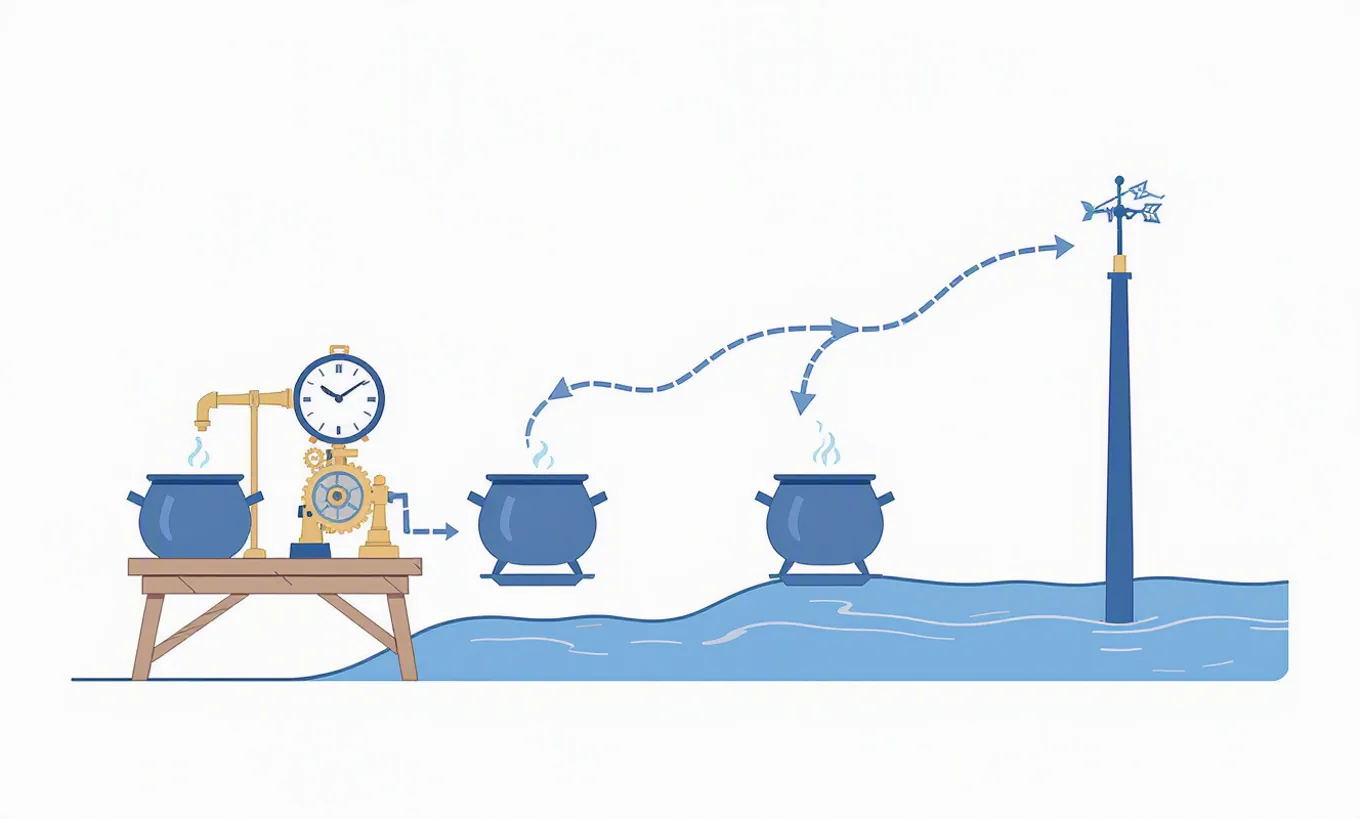
Perpetual futures differ from dated futures because they do not expire. To keep the perpetual price anchored to the underlying spot market, exchanges apply a recurring funding payment between long and short positions. That payment is a real cash flow. It changes realized profit and loss independently of price movement.
That mechanism matters in research. A backtest that models only entry price, exit price, and trading fees can miss a material component of returns. In perpetuals, the strategy is exposed not only to price changes but also to the sequence of funding transfers accrued during the holding period.
The effect is strongest when positions are held through many funding intervals. Even if the price move is favorable, repeated funding debits can reduce or erase that edge. The reverse is also true. Repeated funding credits can improve realized outcomes relative to a price only simulation. In both cases, omitting funding produces a distorted estimate of strategy behavior.
This is not just an accounting detail. It is a path dependent cash flow. Two trades with the same entry and exit prices can end with different net results if they experience different funding paths while open. That means funding should be modeled as part of trade level PnL, not treated as a secondary annotation.
Cross venue data makes this especially relevant. Funding rates are not a single universal series. They vary by venue and by contract. Sonar highlights cross venue data as a research input, which is the right framing for perpetuals because implementation depends on the exact market and exchange used in the test. If a researcher applies one generic funding assumption across all venues, the backtest can drift away from executable conditions.
The practical consequence is straightforward. If a strategy trades perpetual contracts and the backtest ignores funding, the test may overstate or understate performance. Over long holding periods, the cumulative funding cash flow can become comparable to, or larger than, the edge inferred from price changes alone. Whether that happens in a given study depends on the contract, venue, direction, and holding horizon, but the mechanism is inherent to perpetuals.
This sits inside a broader research discipline. Sonar's backtest overfitting audit emphasizes controls against inflated backtest results, and its glossary entry on the deflated Sharpe ratio explains why naive performance estimates can look stronger than they are once statistical adjustments are applied. Funding omission is a different problem from overfitting or multiple testing, but it points in the same direction. A backtest is only as credible as the realism of the cash flows it includes.
For systematic researchers, the implication is to model perpetual funding explicitly at the contract and venue level, apply it over the actual holding intervals, and evaluate results both before and after funding. That comparison helps isolate whether the observed edge comes from price movement, funding carry, or an interaction of the two. Without that step, a perpetual futures backtest is incomplete.
Drafted with AI assistance from cited sources. Reviewed and approved by Sonar Sciences Quant & Research Team.