Why execution research needs tick data
4 min read
A cautious methodological argument: execution research is microstructure‑sensitive, and Sonar’s cross‑venue data and validation tooling are aligned with that reality. Specific empirical tests, backtests, or queue‑reconstruction case studies required to prove that candle‑based execution research mis‑estimates performance versus tick‑level analysis are not included.
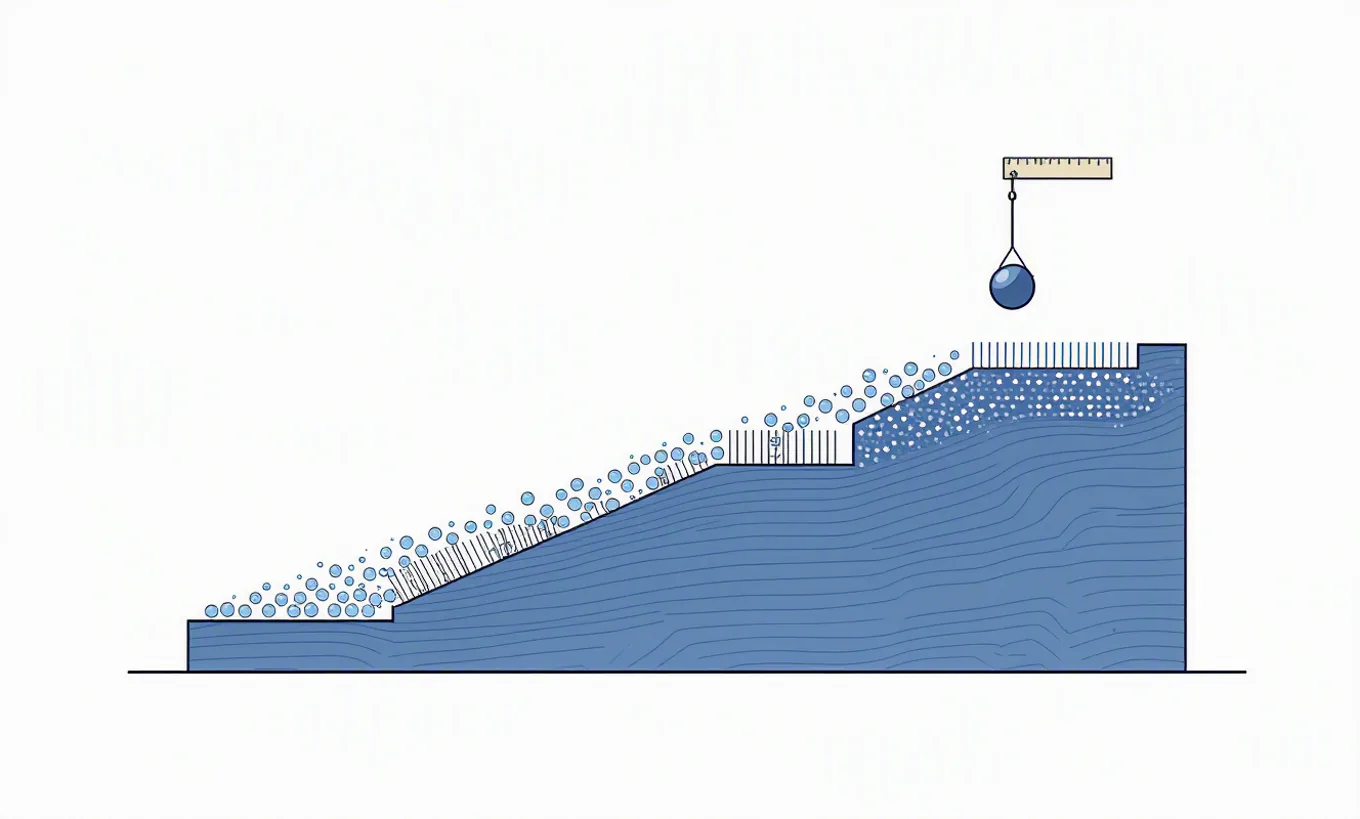
Execution research asks questions that candle data cannot answer. The framing aligns with Sonar’s emphasis on high‑frequency, cross‑venue data and on testing whether a result survives realistic validation rather than relying on coarse summaries.
Sonar presents Sonar as working with normalized market data across venues and emphasizes infrastructure for research on fragmented markets and microstructure‑sensitive questions. This matters for execution research because execution is path‑dependent: when liquidity appears, disappears, or is consumed across venues, the sequence of events affects what could have been filled, at what price, and with what slippage relative to a benchmark. A candle compresses that sequence into aggregate fields such as open, high, low, close, and volume. Once the event order is collapsed, many execution‑relevant states are no longer recoverable from the summary alone.
That loss of sequence is central. Queue position is inherently event‑based: whether a passive order would rest near the front of the queue or be behind later‑arriving liquidity depends on the order of updates and trades. Sweep behavior is also sequential: a move through multiple price levels or venues is defined by how trades and book changes unfold over time, not merely by where a bar opened and closed. True spread cost likewise depends on the exact timing and side of executions relative to contemporaneous quotes. With only candles, a researcher can build proxies.
The backtest overfitting audit page reinforces a second point: execution research should be evaluated with methods that detect fragile conclusions. If a model or cost estimate depends on coarse inputs that omit key state variables, apparent fit can be misleading. The audit tool’s framing is not specifically about tick versus candle execution modeling, but it does support a broader methodological lesson: researchers should test whether a result remains credible after accounting for multiple testing, selection effects, and weak validation practices. In the execution context, using candles when the mechanism of interest is intrabar and microstructural risks producing exactly the kind of false confidence that robust validation is meant to challenge.
The glossary entry on the Deflated Sharpe Ratio adds a related caution. It explains that performance statistics can be overstated when many variants are tried and the best‑looking result is reported without correcting for selection bias. If candle‑based assumptions understate costs or overstate fills, downstream strategy evaluation can inherit that distortion. A corrected performance lens is useful, but it cannot repair missing information in the input data. In other words, statistical deflation addresses overstatement from selection; it does not recreate queue dynamics or intrabar trade sequencing that were never observed.
Sonar’s research and tooling are oriented toward market data and validation practices suited to microstructure‑aware analysis, and that orientation is consistent with the idea that execution research benefits from higher‑resolution data.
Drafted with AI assistance from cited sources. Reviewed and approved by Sonar Sciences Quant & Research Team.