Why consolidated prices hide venue behaviour
3 min read
Consolidated price feeds merge multiple venues into a smoother series that can hide venue-specific spreads, quote gaps, and outages. That smoothing matters because orders execute on individual venues, not on an average market view. Using consolidated prices alone can therefore understate spread variability, mask interruptions, and make backtests appear more stable than live execution conditions.
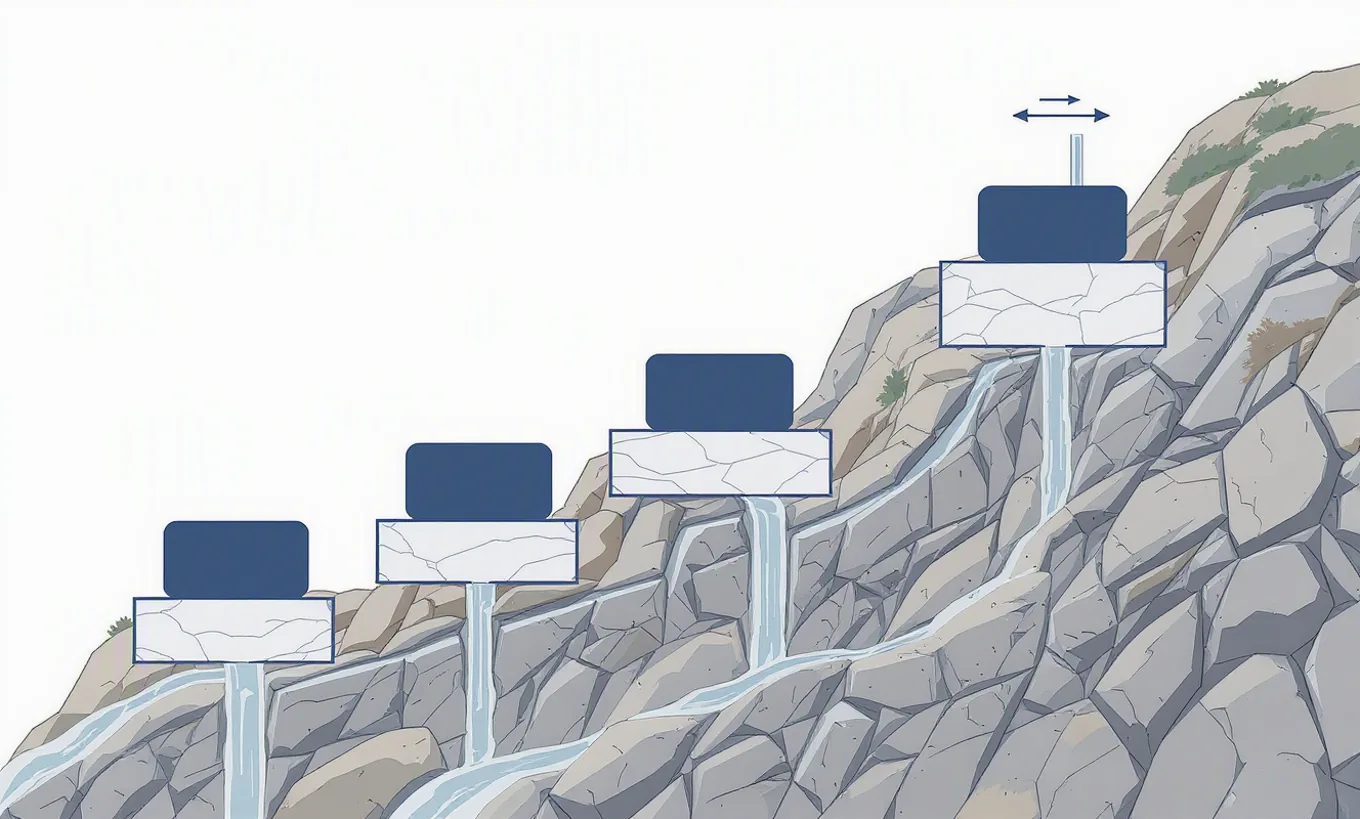
A consolidated price feed combines quotes or trades from multiple venues into one stream. That can be useful for broad market monitoring, but it also removes venue-level detail that execution must face in practice. When a strategy is tested or monitored on averaged prices, it can miss the spread differences, quote gaps, and venue outages that determine whether an order can actually trade at the observed price.
Sonar Sciences’ cross-venue data research states that the same instrument can show materially different conditions across venues at the same time, including different spreads, different quote continuity, and venue-specific data interruptions. The key mechanism is aggregation. Once multiple venue streams are merged into a single consolidated series, the resulting price path is smoother than the underlying venue paths. Local extremes can be muted, temporary gaps can disappear, and outages at one venue can be hidden by continued updates from others. The consolidated feed therefore describes an average market view, not the specific execution environment at any one venue.
This matters because execution happens on a venue, not on an average. If one venue widens sharply while another remains stable, a consolidated feed can report a spread that looks moderate even though the order is routed into the wider market. If one venue stops updating, the consolidated series may still look continuous because other venues continue printing prices. A model built on the consolidated series can then underestimate spread variability, undercount interruptions, and assume liquidity where none exists on the destination venue.
The information loss is not just visual. Sonar’s cross-venue research emphasizes that venue-level analysis reveals dispersion that is hidden after consolidation. In practical terms, this means statistics computed on the consolidated feed, such as average spread, spread variance, quote continuity, and gap frequency, can understate the true range of states that a live execution process will encounter. A consolidated series can therefore make market conditions appear more stable than they are at the venue level.
This interacts directly with backtesting. Sonar’s backtest overfitting audit notes that optimistic assumptions in historical testing can inflate the apparent robustness of a strategy. If the input data already smooths away venue-specific frictions, then the backtest is evaluating the strategy against a cleaner market than the one in which orders must execute. That creates a structural mismatch between research data and live trading conditions. The issue is not only model overfitting in the usual parameter sense, but also overconfidence caused by an overly simplified data representation.
The same principle is relevant to risk-adjusted evaluation. Sonar’s glossary entry on the deflated Sharpe ratio explains that statistical corrections are needed when performance estimates are vulnerable to bias from multiple testing and selection effects. Consolidated prices can be one such favorable assumption because they reduce observed noise and friction relative to venue-level execution reality.
For microstructure work, the practical lesson is straightforward. Use consolidated feeds for market-level context, but use venue-specific data to study execution-sensitive features. Spread behavior, quote gaps, and outages are not secondary details. They are part of the state space that determines fill quality and execution reliability. When those features are averaged away, traders can underestimate the true execution environment they encounter.
Drafted with AI assistance from cited sources. Reviewed and approved by Sonar Sciences Quant & Research Team.