Why broker feeds differ from exchange feeds
5 min read
Broker-visible market data should not be assumed to match raw exchange data. Venue selection and data construction alter observed spreads, prices, and liquidity, and those choices can distort backtest conclusions or inflate confidence if treated as fixed truths.
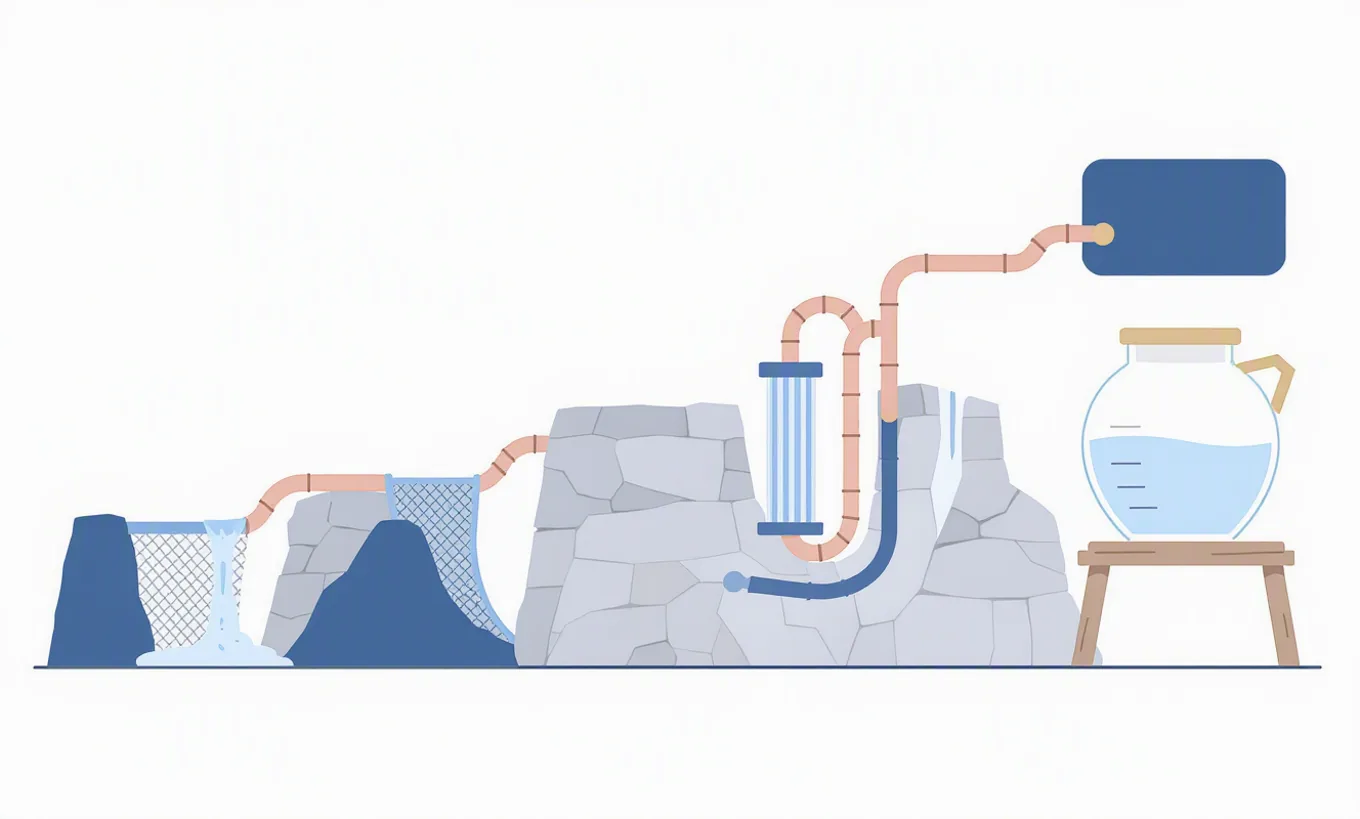
The core issue for a backtest is simple: the data stream it consumes is rarely a perfect copy of the exchange event stream. Between a trading venue and a broker-distributed feed, the data can be transformed by venue consolidation, symbol normalization, resampling, filtering, and pricing conventions. If a researcher treats the broker stream as if it were raw exchange truth, the model may be tested on prices, spreads, and liquidity conditions that did not exist in the same form at the venue level.
Sonar Sciences’ discussion of cross-venue data emphasizes that market data is fragmented across venues and that the observed price process depends on which venue or composite feed is being sampled. Differences in venue selection and consolidation can change measured spreads, trade timing, and apparent liquidity, which means that a strategy calibrated on one feed may not be evaluating the same executable market state as another feed over the same clock time. In practice, this is an aggregation problem before it is a modeling problem: if multiple venues are collapsed into a single broker-visible stream, the resulting series is already an interpretation of the market rather than the market’s full underlying event set [1].
That matters because aggregation changes what a backtest sees. If quotes from multiple venues are consolidated, the observed best bid and offer may be synthetic relative to any single venue’s book. If ticks are sampled, bucketed, or otherwise compressed, microstructure information such as quote updates, fleeting liquidity, and queue dynamics can disappear. The Sonar cross-venue research frames this directly as a measurement issue: venue choice and data construction affect the statistical properties of the series used for research [1].
A second layer is filtering. Even when a broker feed is timely, it may not expose the same depth, message types, or event granularity as direct venue data. A researcher may receive top-of-book snapshots rather than full depth, trades without complete quote context, or normalized bars instead of message-level updates. The consequence is that the backtest’s assumptions about fillability and slippage are conditioned on a reduced representation of the market. Sonar’s cross-venue note supports the broader point that liquidity and spread estimates depend on the underlying source and construction of the dataset; once the source differs, the measured market state differs too [1].
Any intermediary pricing convention layered on top of venue data would further separate the research feed from the raw exchange feed [1][2][3].
For backtesting, the practical implication is model risk from data transformation. Sonar’s backtest overfitting audit tool is relevant here because it treats reported performance as conditional on the research process, including choices in dataset construction and testing workflow. If feed construction changes the apparent opportunity set, then a strategy can look stronger or weaker for reasons unrelated to underlying economic edge. A backtest run on a broker-normalized feed may therefore embed hidden degrees of freedom: venue selection, consolidation rules, quote filtering, and bar-building choices can all influence the apparent stability of signals and execution assumptions [2].
This connects to Sonar’s glossary entry on the Deflated Sharpe Ratio. That metric is presented as a way to discount in-sample performance for multiple testing and non-normal return effects, helping researchers distinguish signal from luck after many trials [3]. Feed choice belongs in the same cautionary framework. If researchers compare many data vendors, many venue composites, or many aggregation settings, they are effectively expanding the research search space. A favorable result obtained on one broker feed may partly reflect data-construction luck rather than a robust effect. The Deflated Sharpe Ratio does not specifically measure feed distortion, but the logic is aligned: when the research pipeline contains many opportunities to select a favorable representation of the market, naive performance statistics can overstate confidence [3].
- Exchange and composite market data are not interchangeable; venue composition changes observed prices, spreads, and liquidity [1].
- Data construction choices in the research pipeline can alter backtest conclusions and contribute to overfitting risk [2].
- Performance statistics should be interpreted conservatively when the research process includes multiple implicit trials or selection steps, which can include trying different feeds or transformations [3].
The supported conclusion is: broker feeds can differ materially from exchange feeds because the observed market data depends on source selection and construction, and those differences can propagate into backtests.
Drafted with AI assistance from cited sources. Reviewed and approved by Sonar Sciences Quant & Research Team.