How to store market data for research
4 min read
Stable, versioned historical data and detailed experiment logs enable quantitative research to remain auditable and repeatable. Making dimensions such as venue and instrument explicit supports cross-venue analysis.
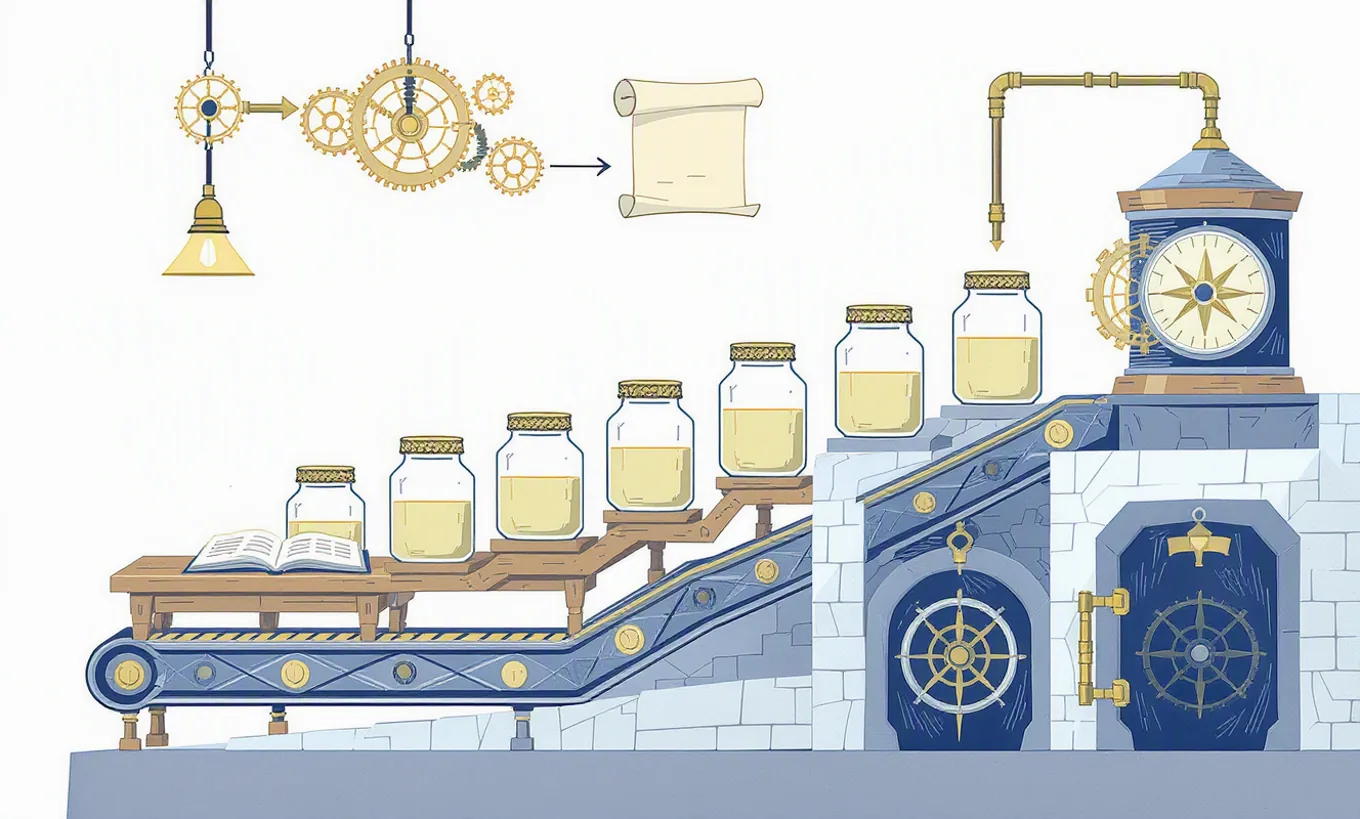
Market-data research depends on storing historical observations in a way that supports repeatable queries and traceable provenance. For candle data, the core design problem is not only how to keep years of records accessible, but also how to preserve the exact historical inputs used in research so later analysis can be checked against the original data.
Auditability requires disciplined record keeping, immutable historical references, and preserved research artifacts to make quantitative results inspectable and repeatable over time.
An audit trail in quantitative research means that a later reviewer can identify what data was used, what test was run, and what output was produced. Sonar Sciences describes this principle directly in its overfitting-audit tool. The tool records strategy variants, parameter sweeps, test counts, and related metadata so researchers can review how many hypotheses were tried and what results were generated. That mechanism illustrates a broader rule for data storage. Historical inputs should be preserved in a way that lets downstream research artifacts point back to a stable record rather than to a mutable dataset that may silently change later.
Research credibility depends on accounting for the full testing process rather than only the final selected result. In storage terms, this implies retaining versioned historical datasets and metadata that identify which dataset version was used in each experiment. If a candle file can be overwritten without trace, the link between a backtest and its actual inputs becomes weaker. If the file is stored as a write-once artifact and referenced by version, the researcher can reconstruct the state of the data used at the time of the test.
Traceable research inputs are essential to avoid misleading performance statistics when many variants are tested, and proper interpretation requires information about the number of trials and the testing context. For a market-data system, this means the storage layer should preserve enough history to let researchers connect a result not only to a metric, but also to the exact historical sample and experimental run that produced it. Auditability is part of statistical integrity.
Data work should be framed around explicit dimensions such as venue and instrument, requiring consistent alignment of observations from different sources for quantitative comparisons across trading venues. That supports the idea that candle storage should be organized so those dimensions are explicit and recoverable. A researcher comparing the same instrument across venues needs a data layout and metadata model that clearly distinguishes source venue, symbol or instrument identifier, and time range. The need for those dimensions to be preserved is clear.
Store historical candle data as stable, versioned research inputs whose provenance is preserved alongside experiment metadata. Make venue, instrument, and time scope explicit in the dataset identity so cross-sectional and cross-venue analysis remains reconstructable. Keep records of dataset versions and experimental runs so later audits can determine exactly which historical candles were used for each result.
Auditable quantitative research requires immutable or version-preserved historical inputs, explicit dataset identity, and experiment logs that record how data was used.
Drafted with AI assistance from cited sources. Reviewed and approved by Sonar Sciences Quant & Research Team.