Databases or flat files for market data
4 min read
Databases and flat files solve different market data problems. Query patterns, dataset size, and team structure should drive the choice because those factors determine both daily efficiency and the cost of switching later.
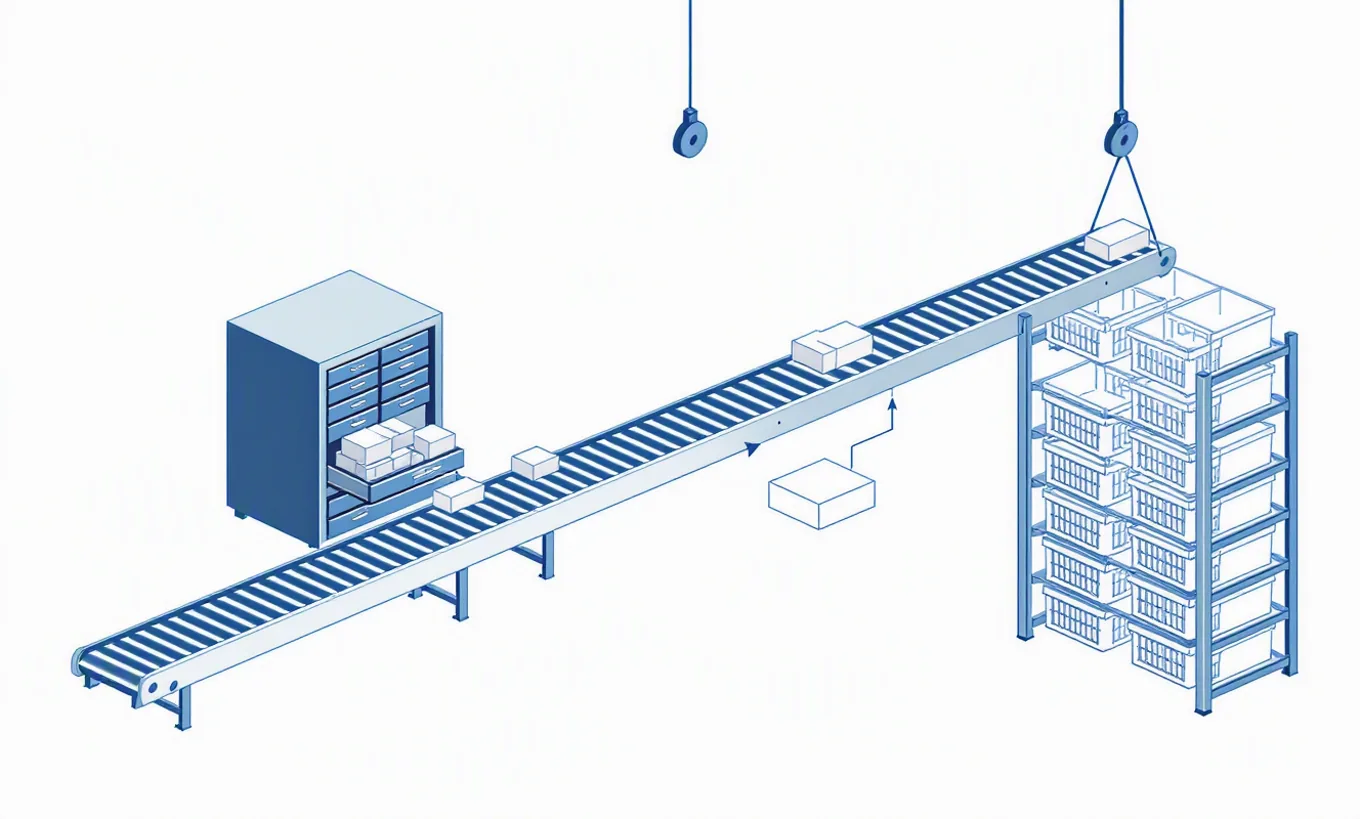
Market data storage is the system a team uses to keep, retrieve, and update historical and live datasets for research, testing, and production workflows. Two common approaches are databases and flat files. A database stores data in a managed system that supports indexed queries, concurrent access, and administrative controls. Flat files store data directly in files such as columnar datasets or serialized tables that programs read from disk or object storage.
The choice between these approaches should be driven by query patterns, dataset size, and team structure. Those factors determine day to day operational efficiency and also determine how expensive it is to switch later.
Query patterns matter because storage systems are optimized for different access paths. A database is generally selected when teams need repeated filtering, joins across tables, updates, and many users or services accessing the same data with consistent controls. Flat files are generally selected when teams process data in large sequential reads, append new partitions, or run batch workflows that can load whole files into memory or distributed compute engines. The mechanism is simple. If the workload repeatedly asks small targeted questions across many related tables, indexing and query planning can reduce unnecessary reads. If the workload mostly scans partitions or columns in bulk, file based layouts can avoid database overhead and fit analytical engines well.
Dataset size matters because scale changes both performance behavior and cost structure. Small and medium datasets can often be handled effectively in either model, so team familiarity and workflow shape may dominate the decision. As data grows, the tradeoff becomes sharper. Large file collections can become difficult to catalog, validate, and govern if many producers and consumers touch them. Large databases can become expensive or operationally complex if the workload is mostly wide scans that do not benefit from transactional features or indexes. The mechanism is that larger datasets amplify the cost of every inefficiency. Repeated full scans become more expensive, metadata management becomes more important, and maintenance tasks such as compaction, partitioning, indexing, and retention policies start to dominate engineering time.
Team structure matters because the same technology can be easy for one team and costly for another. A team with dedicated data engineers and platform support can usually operate a database more reliably, tune schemas and indexes, manage permissions, and build ingestion and monitoring around it. An analyst heavy team or a smaller research group may prefer flat files because the operational surface area is smaller and the data can be inspected and manipulated with standard analytical tools. The mechanism is organizational rather than purely technical. Every storage choice creates recurring work in schema design, data quality checks, partition strategy, access control, lineage, recovery, and user support. The right choice is the one whose ongoing maintenance burden matches the skills and staffing of the team.
Switching costs run in both directions. Moving from flat files to a database is not just a matter of loading existing data. It usually requires schema design, type normalization, key selection, ingestion pipelines, access patterns, permission models, and validation that query results match the prior file based workflows. Moving from a database to flat files also has real costs. Teams often need to redesign extraction jobs, decide on partitioning and file formats, rebuild metadata layers, replace database level controls with external governance, and rewrite downstream code that relied on database semantics such as joins, transactions, or point lookups. In both directions, migration cost depends on how much application logic, tooling, and user behavior is coupled to the current storage model.
Operational efficiency is therefore the product of technical fit and organizational fit. A database is often operationally efficient when the workload needs selective retrieval, frequent joins, shared access, and managed controls, and when the team can support the administrative complexity. Flat files are often operationally efficient when the workload is batch oriented, partition friendly, and analytical, and when the team benefits from simpler infrastructure and direct interoperability with research tools. Neither approach is universally better. The efficient choice is the one whose strengths align with the dominant query patterns, the scale of the datasets, and the people who must maintain it.
Drafted with AI assistance from cited sources. Reviewed and approved by Sonar Sciences Quant & Research Team.